Animation's Role in Boosting User Interaction Within Virtual Casino Settings
Willa Reed · Jul 9, 2026
Animation's Role in Boosting User Interaction Within Virtual Casino Settings
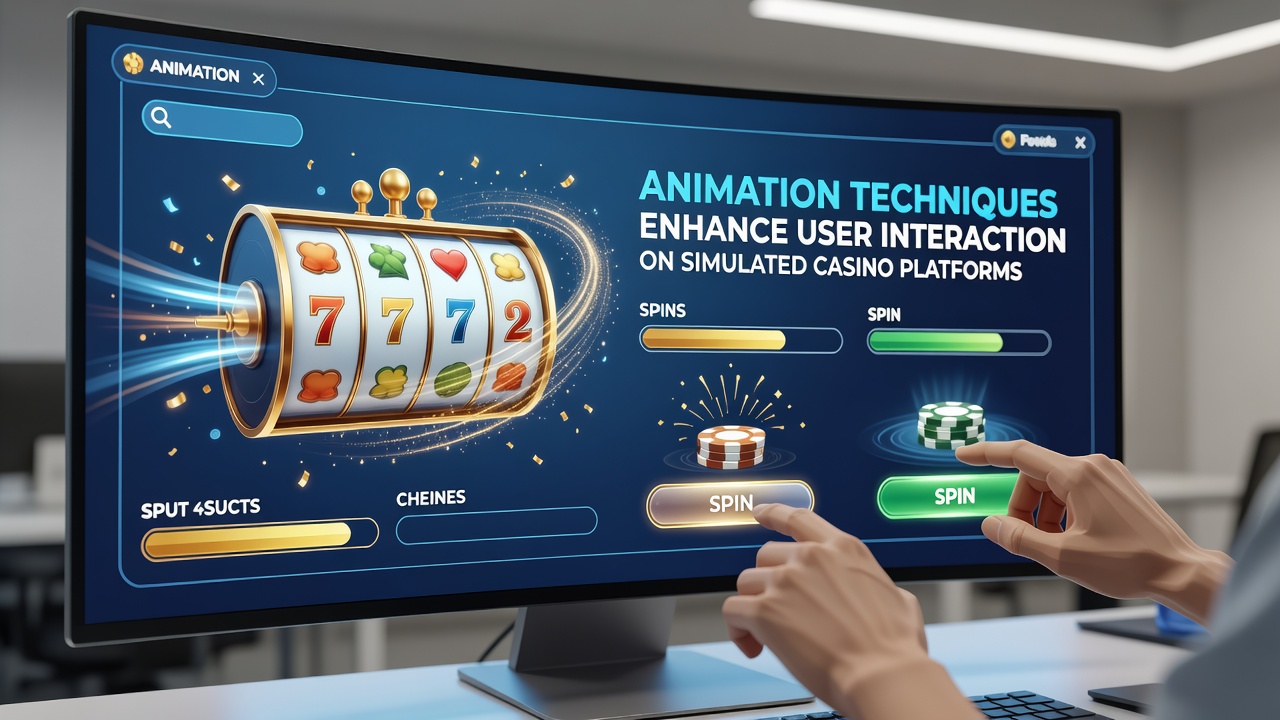
Animation techniques form a core component of user interface design across platforms that deliver simulated casino experiences, where visual motion guides player actions and provides immediate feedback during gameplay sequences. Developers integrate these methods to create responsive environments that align with the fast-paced nature of digital gaming, and research from various institutions shows how targeted animations can sustain attention spans while reducing navigation errors on complex menu systems.
Core Animation Methods Applied in Simulated Casino Interfaces
Particle systems appear frequently in slot simulations, where cascading symbols trigger bursts of light and color that respond directly to user clicks or spins, and these effects draw from established principles in computer graphics that date back to early video game development. Smooth transitions between game rounds, such as fading overlays during bonus round activations, help maintain visual continuity without abrupt screen changes, whereas frame-by-frame sequences in card dealing animations replicate physical movements to clarify outcomes in real time.
Developers often combine easing functions with object scaling to highlight winning combinations, allowing elements to grow and settle in a manner that emphasizes results without overwhelming the display. According to reports issued by the European Gaming and Betting Association, such layered animations contribute to clearer information delivery when multiple game options populate a single dashboard.
Interaction Feedback Through Dynamic Visual Responses
Immediate visual cues, including ripple effects on buttons and expanding progress indicators during loading phases, inform users that their inputs have registered successfully, which proves essential in environments where rapid decisions determine session flow. Hover states that animate subtle glows around selectable tiles encourage exploration of additional features like paytable views or history logs, and these micro-interactions accumulate to form a cohesive navigation experience.
Studies conducted by researchers at institutions focused on human-computer interaction have documented how timed animations can align with expected response latencies, preventing perceptions of lag that might otherwise prompt repeated clicks. In July 2026, data compiled through industry monitoring efforts indicated increased session durations on platforms employing synchronized sound and motion pairings during jackpot reveals, though exact metrics vary by regional implementation standards.
Technical Implementation Across Different Game Types
Reel-based games rely on physics-inspired spin decelerations that simulate momentum buildup and release, creating anticipation through variable timing intervals that adjust based on random number generator outputs. Table simulations utilize flip and stack animations for chip placements, ensuring players track bet adjustments across multiple positions without losing spatial context on the virtual felt surface.
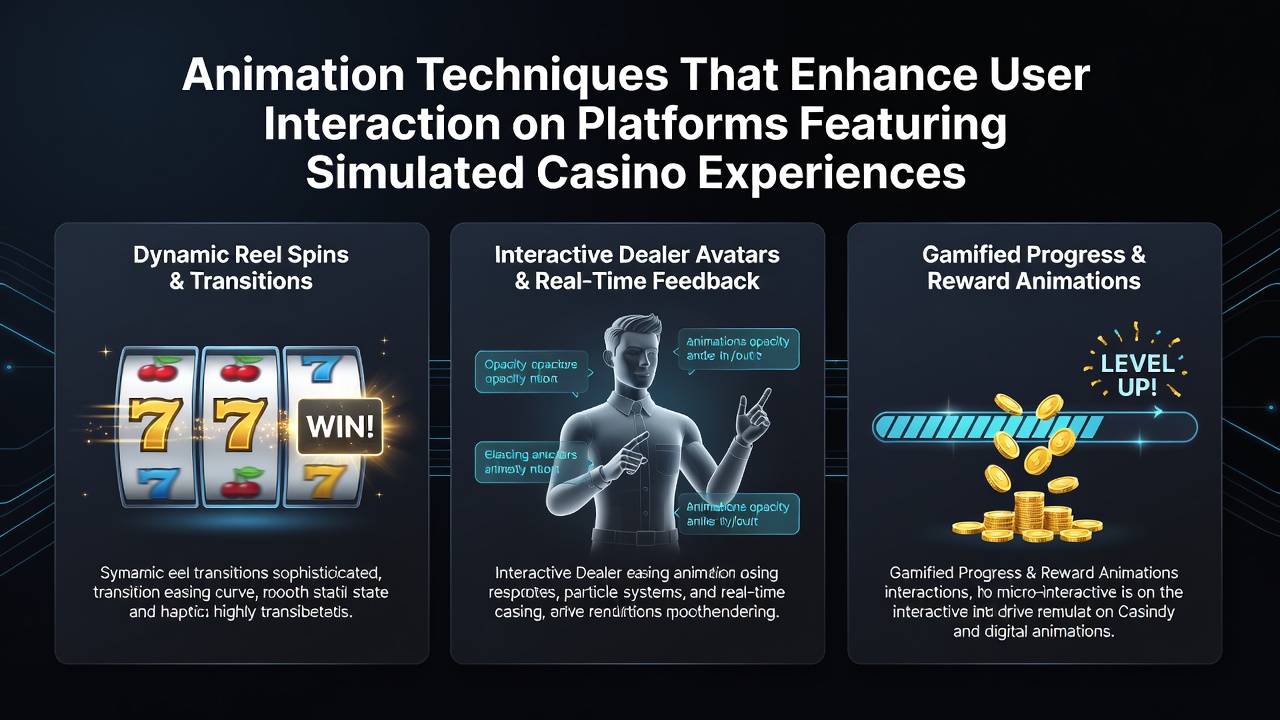
Live-streamed hybrids incorporate overlaid graphics that pulse or highlight during dealer actions, bridging physical feeds with digital overlays to direct viewer focus toward key events. Observers note that these techniques draw from established animation libraries such as those integrated into modern web frameworks, allowing consistent performance across desktop and mobile access points while maintaining frame rates above established thresholds for fluid motion.
Accessibility Considerations in Animated Casino Designs
Platforms incorporate options to reduce motion intensity through user preference settings, which aligns with guidelines from bodies like the Malta Gaming Authority that address inclusive design in regulated environments. Color contrast adjustments paired with animation speed controls enable broader participation, and testing protocols often include evaluations of how these elements perform under various device capabilities.
Industry reports from sources such as the Nevada Gaming Control Board highlight instances where simplified animation modes have been deployed alongside standard versions to accommodate different user needs without altering core gameplay mechanics.
Data Patterns Observed in Engagement Metrics
Analytics from multiple operators reveal correlations between specific animation triggers and repeat visit rates, particularly when reward sequences feature escalating visual complexity that builds across consecutive plays. These patterns emerge consistently in datasets that track click-through behaviors on animated versus static interface elements, and they inform iterative updates to existing titles.
Academic papers examining digital entertainment interfaces further suggest that balanced animation density prevents visual fatigue while preserving the immersive qualities central to simulated casino formats.
Conclusion
Animation techniques continue to evolve within simulated casino platforms as developers refine methods that support clearer interaction pathways and sustained visual engagement. Evidence from regulatory reviews and technical studies demonstrates their integration into feedback systems, game transitions, and accessibility features across diverse implementations, with ongoing adaptations reflecting changes in device standards and user expectations through 2026 and beyond.