Encryption Protocols Safeguarding Multiplayer Sessions Across Digital Card Tables, Reels, and Wagering Wheels
Blake Schwarz · Jun 11, 2026
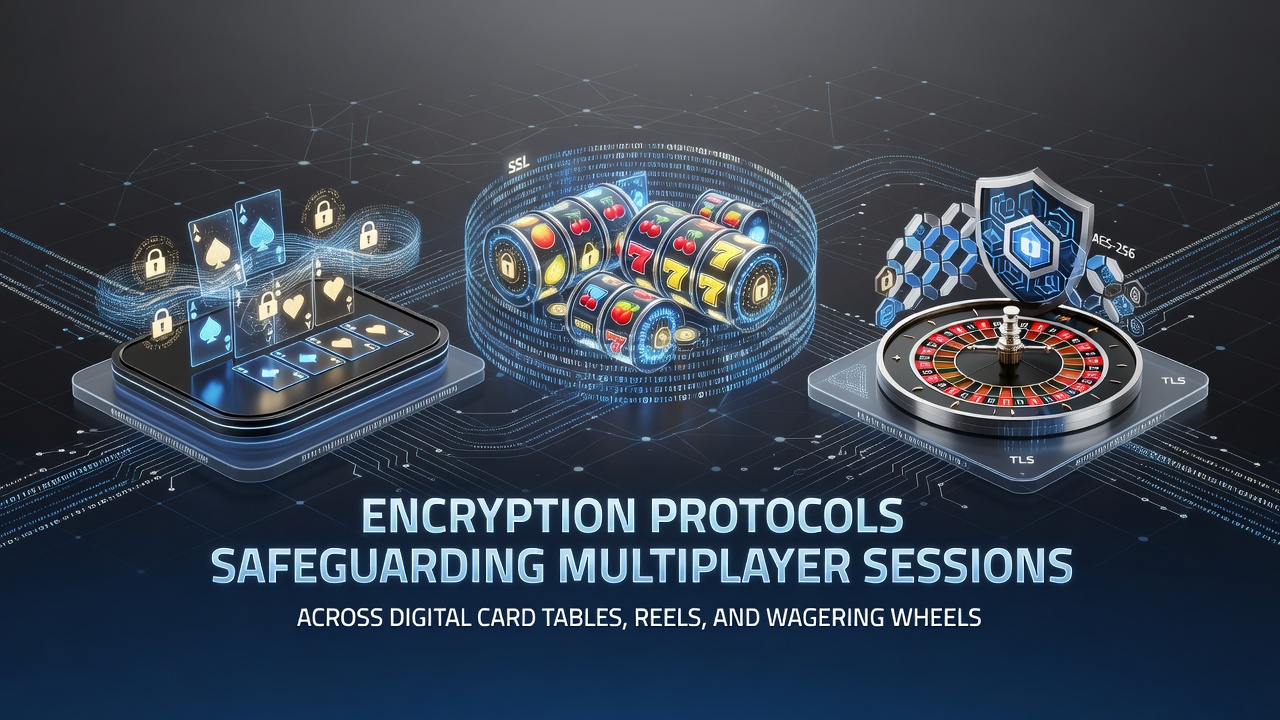
Encryption Protocols Safeguarding Multiplayer Sessions Across Digital Card Tables, Reels, and Wagering Wheels
Online multiplayer gaming environments rely on layered encryption systems to maintain session integrity across card tables, spinning reels, and rotating wagering wheels, and these measures have evolved considerably by June 2026. Data transmitted between players and servers passes through protocols that prevent interception while preserving real-time interaction speeds required for live table decisions and random outcomes.
Core Encryption Standards in Use
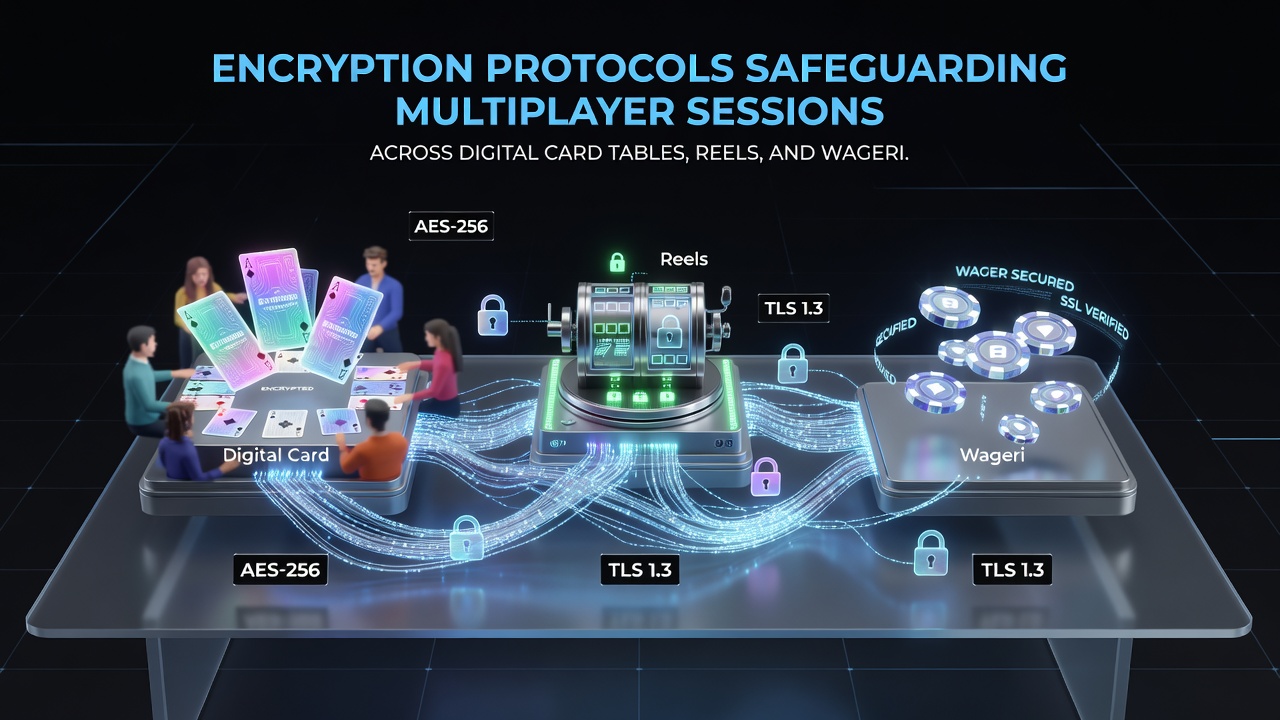
Transport Layer Security version 1.3 serves as the foundation for most connections, replacing older variants with streamlined handshakes that reduce latency during player joins and action submissions. AES-256 encryption handles the bulk data flows for game states, including card distributions in poker rooms and reel position calculations in shared jackpot slots, while elliptic curve cryptography manages the initial key exchanges that authenticate both client devices and operator servers.
Researchers at institutions tracking these implementations note that forward secrecy features ensure past sessions remain protected even if long-term keys face future compromise. This approach matters in environments where participants switch between tables or wheels rapidly, because each connection generates unique session keys that expire quickly after logout or disconnection.
Application to Specific Game Types
Digital card tables require encryption that covers not only bet placements but also the shuffling algorithms and community card reveals. Secure multi-party computation techniques allow the system to distribute encrypted card values so that no single server holds the full deck in plaintext, and players receive only their assigned hands through individually decrypted channels. Multiplayer reel games extend similar protections to synchronized bonus rounds, where participant contributions and prize allocations travel under the same AES streams.
Wagering wheels add another dimension because outcome generation often involves certified random number generators whose seeds must stay encrypted until the wheel animation completes. Observers note that protocols incorporate timestamping and hash chaining to verify that wheel results match the pre-committed encrypted values, reducing opportunities for post-round alterations.
Key Management and Certificate Practices
Operators maintain hardware security modules that store private keys separately from application servers, and these modules perform cryptographic operations without exposing keys to memory. Certificate authorities issue short-lived certificates that gaming platforms rotate automatically, and automated renewal processes prevent expiration gaps during peak traffic periods. Data from regulatory testing in multiple jurisdictions shows that platforms passing independent audits demonstrate consistent use of these rotation schedules.
Players connect through client applications that validate server certificates against root stores updated by operating system vendors. When mismatches occur, connections terminate before any game data transfers, and this handshake failure triggers alerts within operator monitoring systems. Those who've examined breach reports find that proper certificate pinning further reduces risks from man-in-the-middle attempts targeting mobile networks.
Regulatory Context and June 2026 Developments
By June 2026 several oversight bodies had begun requiring explicit documentation of encryption parameters during licensing renewals. The National Institute of Standards and Technology updated guidance on post-quantum cryptography preparations that some international operators started incorporating into their roadmaps, while Canadian provincial regulators emphasized testing of session replay protections in their compliance checklists. These shifts prompted platforms to conduct additional penetration testing focused on multiplayer synchronization points.
Industry reports indicate that adoption rates for TLS 1.3 reached near-universal levels among licensed operators serving cross-border traffic, and testing intervals shortened from annual to quarterly reviews in certain markets. Academic papers examining these implementations highlight measurable reductions in successful injection attempts when session tokens receive additional encryption wrapping beyond standard transport protections.
Performance Considerations During Live Play
Encryption overhead remains minimal because modern processors handle AES operations in hardware, allowing frame rates for wheel animations and card flips to stay consistent. Developers optimize packet sizes so that encrypted payloads fit within single network frames, and compression occurs before encryption to avoid expanding data volumes unnecessarily. Those monitoring server logs report that properly tuned systems show negligible increases in round-trip times compared with unencrypted test environments.
Disconnection recovery mechanisms re-establish encrypted tunnels without requiring players to re-authenticate fully, preserving game state through resumable session identifiers that carry forward only after fresh key confirmation. This design supports uninterrupted participation across card tables and reels when network conditions fluctuate.
Conclusion
Encryption protocols continue to form the backbone that keeps multiplayer sessions secure across digital card tables, reels, and wagering wheels. Continued alignment with evolving standards and testing requirements supports the ongoing reliability of these protective measures as technology and regulatory expectations advance.